


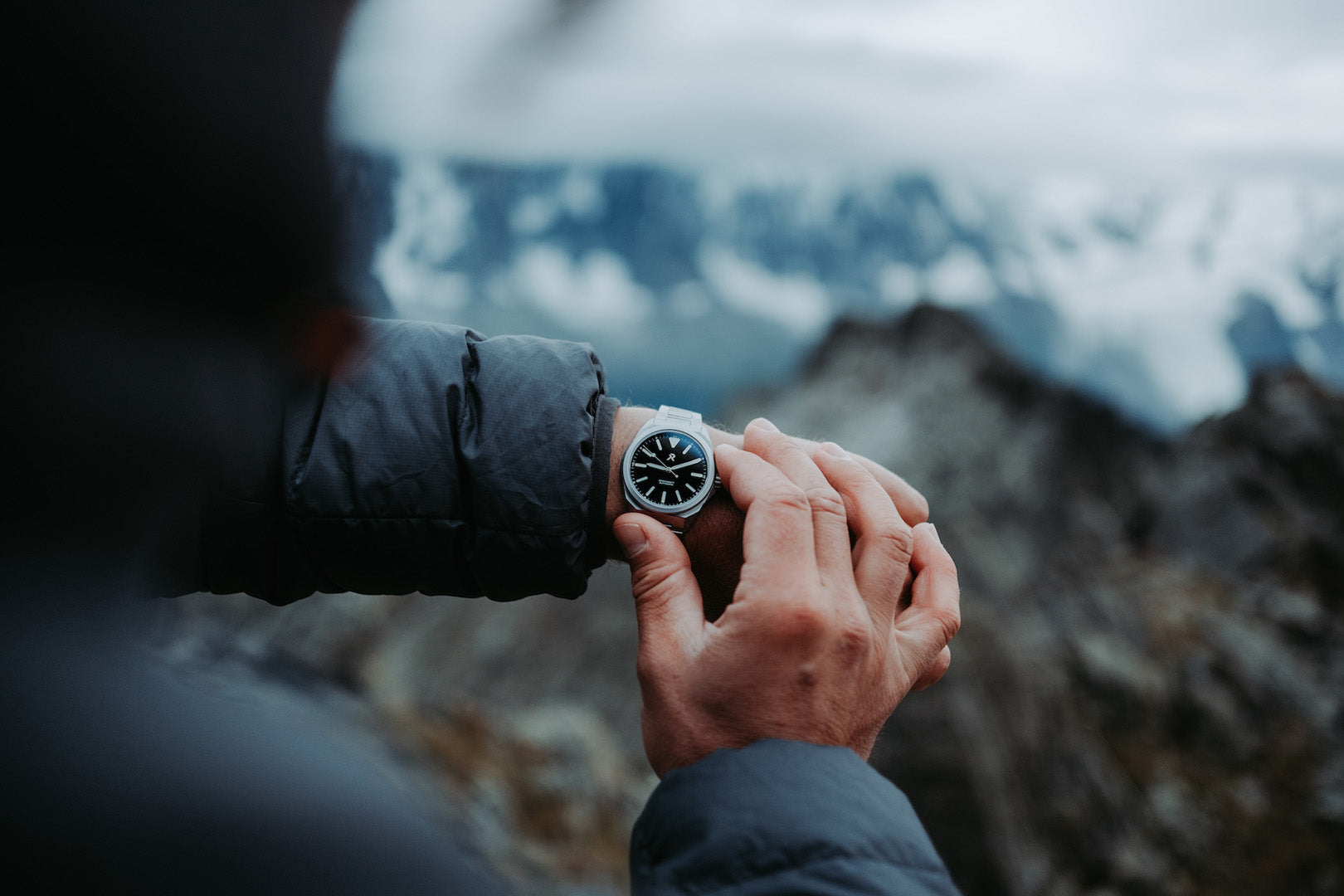




Most watch care advice is written for a watch that never goes anywhere. Wipe with a soft cloth. Store away from direct sunlight. Keep clear of magnets. That's fine if your watch lives in a drawer between wears. It's useless if your watch has been in saltwater, dragged across granite, caked in mud, or left on a dashboard in an Australian summer that can soften plastic.
I've had watches come back from a trip looking like they fought something and lost. A scratched crystal from a fall I don't even remember. A clasp that seized up after a river crossing, salt working its way into somewhere it had no business being. A case back scuffed white from being knocked against rock at a campsite. None of that gets covered in the generic guides, because those guides assume a life the watch is never actually going to live.
So let's talk about care for a watch that's built to leave the house, because the advice is different, and some of it contradicts what you've probably read.
The Water Resistance Myth

Seeing "water resistant" on a spec sheet doesn't mean the watch is fine to wear in the shower, let alone swimming or diving. Resistance ratings are tested under static pressure in a lab, not under the pressure changes of movement, temperature shifts, or a crown that's been left unscrewed. If your watch has a screw-down crown, check it every single time before it goes near water. That five-second habit is the difference between a fine watch and a fogged crystal.
The Damage You Don't Notice Happening
Most damage isn't from the big dramatic moment; it's from the small repeated ones. Micro scratches from brushing against rock or gear all day. Dust and grit are working into the case back threads. Salt residue left to dry on a clasp instead of being rinsed off. None of it looks like much in the moment. All of it adds up over a season of actual use.
A Maintenance Rhythm That Actually Fits Field Use
The maintenance rhythm that matters for a field watch isn't the same as the rhythm for a dress piece sitting in a drawer. Rinse it in fresh water after anything salt or sweat-heavy. Dry it thoroughly before it goes back in a bag, especially the clasp and crown area, where moisture tends to collect. Don't wait for an annual service schedule someone wrote for a watch that's never left a climate-controlled room. If yours is getting real use, get the seals checked more often than that.
Why the Coating Matters More Than the Cloth

This is really where most watches earn their scars. Titanium is light and strong, but in its raw state, it oxidizes easily, which is exactly why it picks up scratches so fast. It's part of why we built UltraHex the way we did. It's a proprietary titanium hard coating that increases surface hardness to up to 8 times that of stainless steel, meaning the case and bracelet actually withstand the kind of contact that would leave a raw titanium watch looking chewed up after a single trip. It doesn't mean you can skip caring for the watch altogether. It means the watch survives the moments care alone wouldn't be enough for, the knock against rock, the scrape through a pack, the years of small contact that build up whether you're careful or not.
Care Versus Durability
That's the real distinction worth making. Care keeps the watch clean and functioning. Durability is what decides whether it still looks like itself after the trip that mattered most. A watch that's actually built for use should be able to take the hit you didn't see coming, not just survive the ones you were careful about.
The watches that end up meaning the most usually aren't the ones that got babied. They're the ones that went everywhere and still look like day one.


