


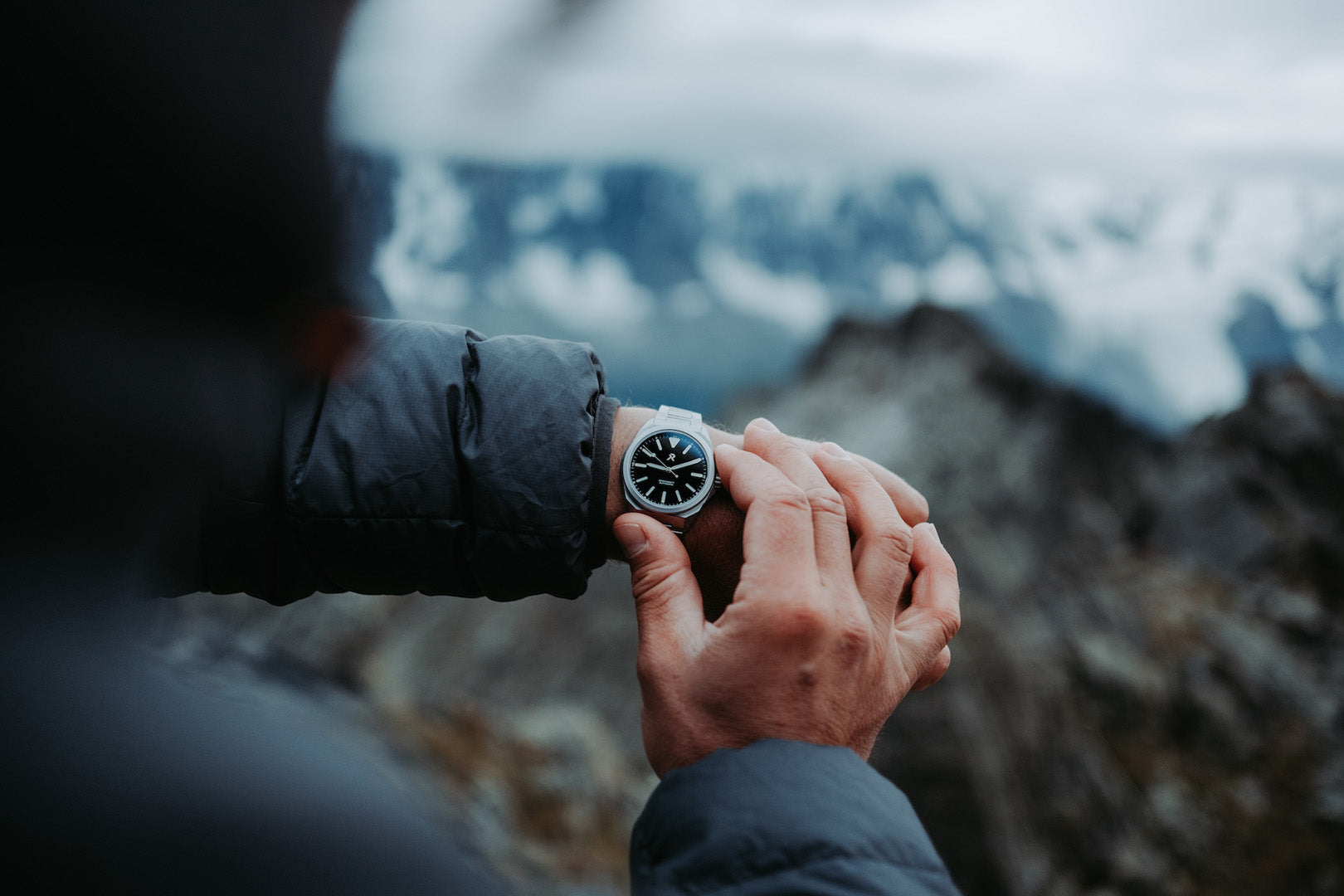



I check my wrist before I've even thought about it. Standing at the trailhead, gear sorted, boots laced, and my eyes drop to the watch like it's going to tell me something I don't already know. It won't. My phone knows the time better than my watch does. It knows the weather, the sunset, the exact minute the last light will hit the ridge I'm walking toward. My watch knows none of that. It just sits there, doing the one thing it was built to do, and somehow that's not why I'm wearing it anymore.

Somewhere in the last decade and a half, watches quietly stopped being information devices, and almost nobody noticed, because the thing that replaced their function wasn't a void. It was something people wanted more.
It's worth being honest about how total that loss was. GPS made the compass bezel decorative. Phones made the glance at a wrist unnecessary for anything beyond habit. Even the smartwatch, which tried to claw back utility with notifications and heart rate data, solved the problem by creating a new one: something that needs charging every night has already lost the argument for being a watch. The field watch, the dive watch, the simple three-hand piece on a leather strap, none of them have a practical case left to make. If you're buying one for what it does, you're buying the wrong tool.
And yet interest in exactly those watches hasn't shrunk; it's grown. That's the part worth sitting with. Not despite losing its job, but because of it. A watch that no longer needs to justify itself with function is free to mean something instead. It's the same thing that happened to fountain pens once keyboards took over, or film once digital sensors got good enough, or manual transmissions once automatics stopped being worse. Obsolescence didn't kill any of those objects. It just changed what people were actually buying when they bought one.

What's being bought now is something closer to relief than nostalgia. A watch is one of the last objects most of us own that measures time without also trying to sell us something while doing so. No feed, no notification, no algorithm deciding what surfaces next. You look, you get one piece of information, and the loop closes. That's a strange kind of luxury in 2026. Most of what we look at during the day is designed to keep us looking. A watch is designed to let you stop.
There's a ritual sitting underneath all of this that has nothing to do with reading the time at all. Winding a mechanical movement before you leave the house. Deciding which watch to put on for which kind of day, the beater for a shoot in bad weather, the dressier piece for a day indoors. None of that carries any informational payoff. You'd know the time either way. But the act itself has become the point, a small deliberate motion that has more in common with tying boots or packing a bag than with checking a screen. It's not about knowing what time it is. It's about marking the start of doing something.

I don't think that's a loss. I think it might be the best thing that has ever happened to the watch as an object. Things don't need a function to justify existing forever. Sometimes losing the job is exactly what lets something become personal instead of practical, worn for reasons that have nothing to do with efficiency and everything to do with how a day is supposed to feel before it starts.
So the watch on my wrist right now isn't telling me anything my phone couldn't tell me faster and more accurately. It never will again. But putting it on before I walk out the door is still the last honest ritual I have before a day in the field starts, and that's worth more to me than the time ever was.


