





Nobody sets out to become the kind of person who can't switch off. It just happens somewhere between the first trail that broke them and the one that brought them back, between the first assignment that went sideways and the instinct that got them through it. At some point, the line between everyday life and the next expedition stops being a line at all.
You've probably met one of these people without realizing it. They're not the loudest person at the gear swap. They're not posting the most. But look at what's on their wrist, what's in their bag, how they move through a room, and something registers. This person has been somewhere. This person is always, on some level, ready to go again. We started paying attention to four of them.
THE TRAIL RUNNER — Weight is a decision
 The ultralight runner operates on a principle most people find uncomfortable: if you're not sure you need it, you don't bring it. Every gram on a 50-kilometer technical mountain run is a gram that compounds over elevation, over distance, over the hours when the body is negotiating with itself about whether to keep going.
Their kit is minimal by necessity, not aesthetic. A pack that sits close to the spine. Nutrition that fits in a pocket. Navigation that doesn't depend on battery life. And a watch that doesn't require a decision because at kilometer 40, the only thing worth thinking about is the next kilometer.

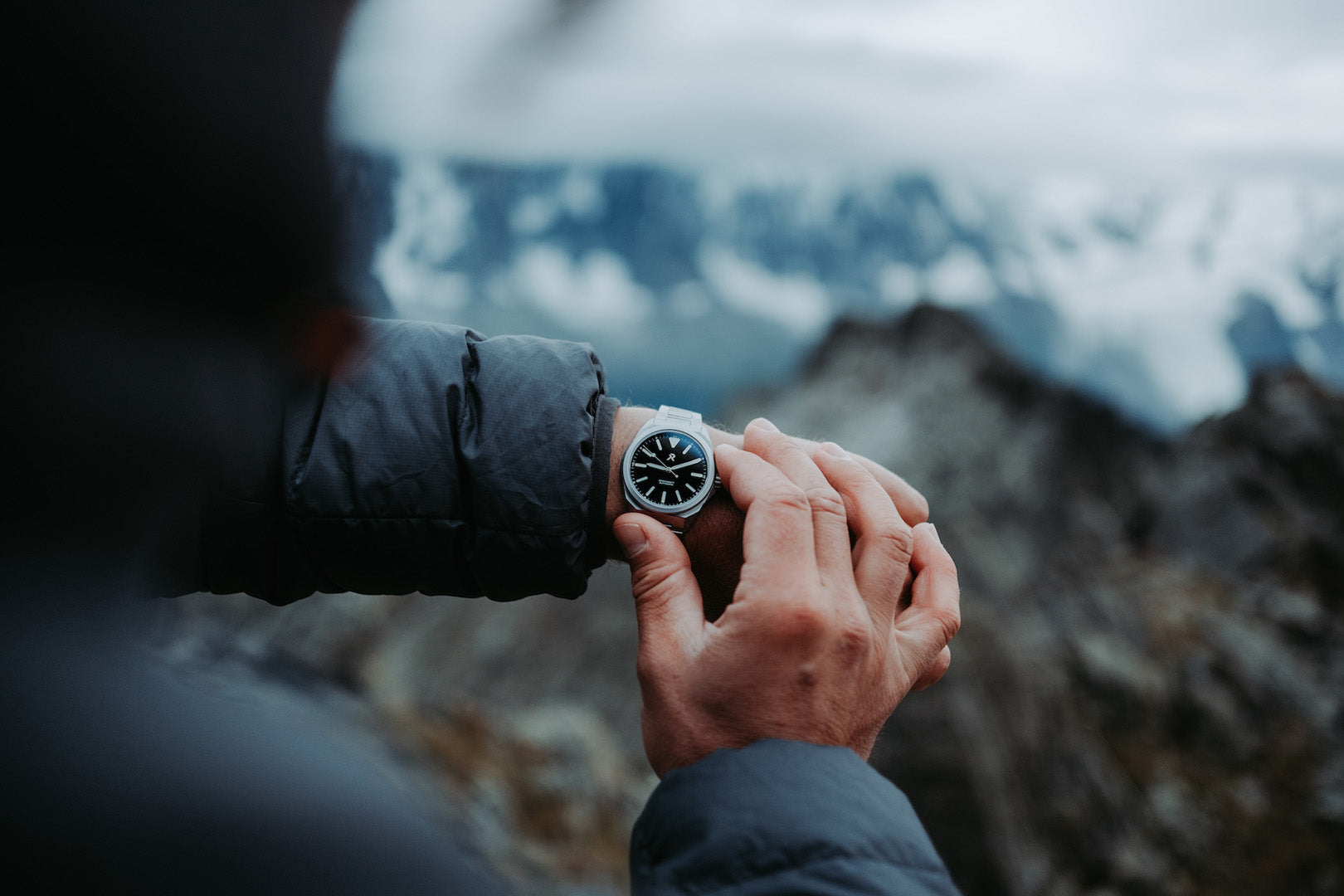
What this type looks for isn't a running watch in the traditional sense. It's something that transitions without ceremony from the trail to the coffee shop afterward, without broadcasting which world it just came from. Durability isn't a feature they look for in marketing copy; it's something they've learned to read in the weight of a case and the scratch resistance of a crystal. Lightweight titanium isn't a luxury for these people. It's just logical.
What their watch needs to do is what a phone can't do and still work when the phone doesn't.
THE TRAVEL PHOTOGRAPHER — Readiness is everything

The travel photographer exists in a permanent state of controlled chaos. They might be shooting a street market in one city and a product launch in another within the same week. Their gear has to survive checked luggage, humidity, the back of a motorcycle, and the inside of a camera bag that's been dropped more times than they'd like to admit.
There's a discipline to how this type packs that looks effortless from the outside and is anything but. Every item has been road-tested to the point of failure and replaced by something that didn't fail. They've learned not to be precious about kit because preciousness slows you down. The shot that matters happens in the gap between moments, and nothing in their bag can be the reason they missed it.

Their watch exists in the same category as their camera body; it has to be ready before they are, and it can't ask for attention while they're working. Scratches are a record, not a tragedy. A case that wears its history without looking battered is part of the appeal. So is the ability to go from a dusty back-alley shoot to a brand event without anyone questioning whether it belongs in the room.
What their watch needs to do that a phone can't: give a clean time-read in low light without breaking the moment.
THE FIRST RESPONDER — Failure is not an option

For the professional operating in high-stakes environments, the paramedic, the firefighter, the law enforcement officer, EDC is not a lifestyle conversation. It is operational. Every piece of kit on their person has been chosen through a lens most civilians never have to apply: what happens if this fails at the worst possible moment?
They've worn gear that looked tough. Watched it crack, fog, scratch through, or stop working under conditions that weren't even that extreme by their standards. The field is an unforgiving testing environment, and it has made them unsentimental. They don't buy into branding. They buy into track records.

Their relationship with a watch is one of the more telling things about how they approach gear in general. It has to be legible fast, in bad light, with gloves on if necessary. It has to survive the kind of incidental punishment that would ruin something designed to look rugged but not actually be. And it has to disappear into the work, not become a conversation, not require maintenance, not give them a reason to think about it at all. Titanium construction, real water resistance, and a dial that reads at a glance aren't nice-to-haves for this person. They're the baseline.
What their watch needs to do that a phone can't: function when everything else has already gone wrong.
THE URBAN EXPLORER — The city is the terrain
 The urban explorer is perhaps the most underestimated of the four. Their adventure doesn't announce itself with a trailhead or a departure gate. It happens in the margins of a city the rooftop at golden hour, the canal path before dawn, the side street that became a project that became something they're proud of. They move through the built environment with the same intentionality that a mountaineer moves through the natural environment.
Their EDC reflects a different kind of dual life. They need gear that functions in a meeting and on a fire escape. That looks considered in a creative studio and holds up on a night shoot in weather that was never in the forecast. They're not buying tactical that aesthetic doesn't fit their world. But they're also not buying fragile. They occupy a specific gap between the two, and they know it.
 What they want from a watch is honesty. Not a dress watch performing utility, it wasn't built for that. Not a tool watch pretending to be something more refined. Something that was genuinely designed for both, without the compromises that usually come from trying to serve two masters at once. The everyday adventurer, in other words, is in the most literal sense.
What their watch needs to do that a phone can't: look like it belongs everywhere, because it actually does.
The through-line
Four different people. Four completely different definitions of adventure. But spend any time with this type any of them and one thing becomes consistent: they stopped thinking about their gear as separate from themselves a long time ago. It's not kit they put on. It's a kit they don't take off.
The watch, more than most things, is where that philosophy lands. Not because it's the most technical piece of equipment they own. But because it's the one that's always there on the trail, in the field, at the gate, on the street, quietly doing its job without asking for credit.


