


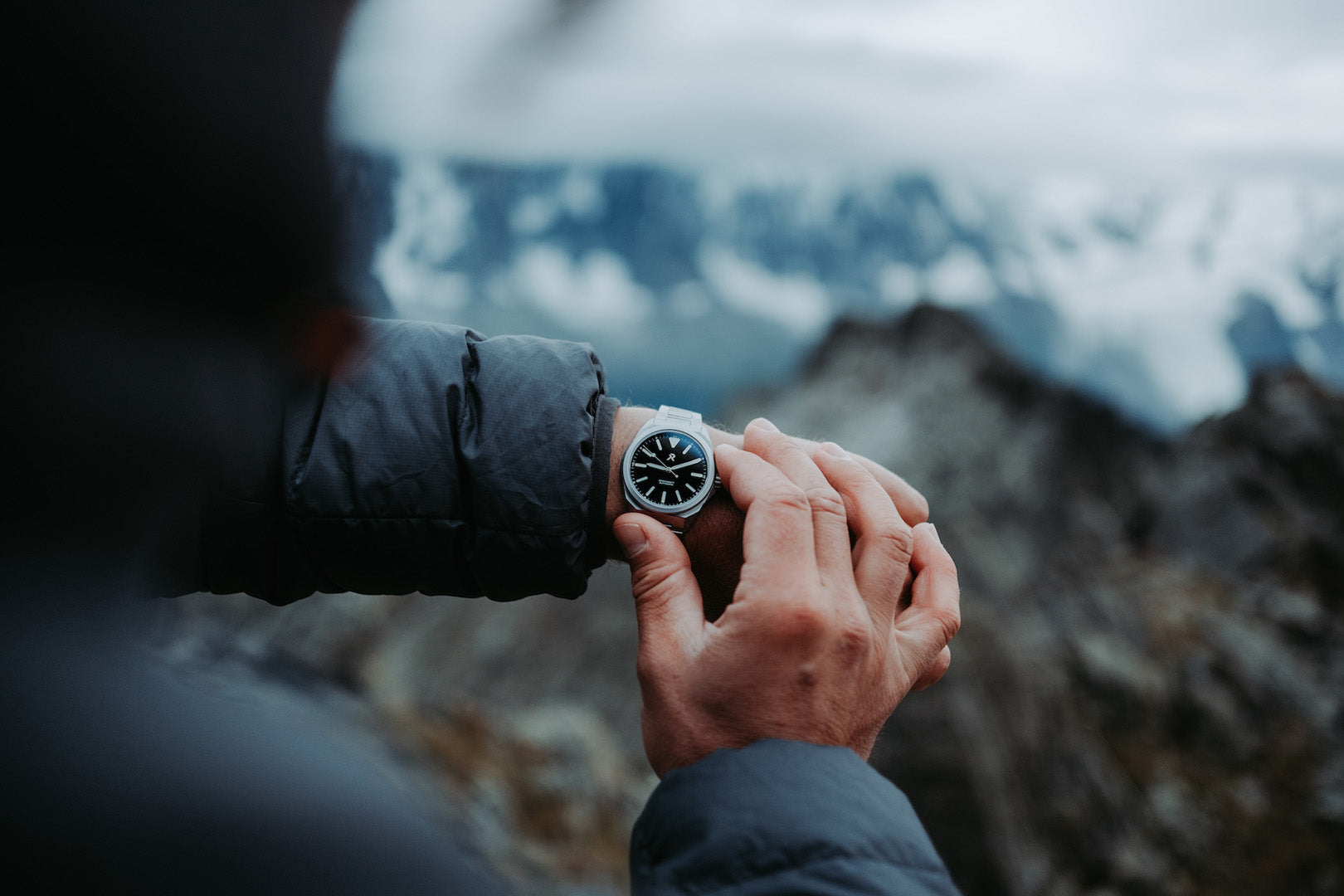



You don't fall in love with gear at first glance; you realize it never leaves your side. There's a phase every piece of gear goes through. First, it's all attention like a shiny new toy that you just purchased. You notice the finish, the weight, the way it sits on your wrist or disappears into your bag. You adjust it, check it, admire it. It feels new, and because it feels new, it feels important.
Then something shifts. The best gear doesn't get better; it gets quieter, not in presence, but in friction. You stop adjusting it. You stop thinking about it. It just works, and that's when it earns its place.
Over the years, I have had the chance to try out gadgets, gear, and EDC items. The thrill of unboxing something new and taking photos of it is exciting. However, over time, I tend to go back to certain pieces of gear. That's when I realized that those are the 'right' gear for me.

A watch that requires no special care. A bag that opens exactly where your hand expects it to. A knife that vanishes until you need it, and when you do, it's already there. Even a camera that stops being just equipment and becomes an extension of instinct.
None of these things is impressive in isolation. In fact, most of them would lose in a spec sheet comparison. They're not trying to win that game. They win somewhere else. Good gear demands attention. Great gear removes decisions.
You don't think about whether it can handle the day; you move through it. You're not adjusting straps, checking alignment, or second-guessing durability. There's no negotiation between you and the object. It has already proven itself, and now it stays out of the way.
That's the part people miss when they chase upgrades. I used to be the same, always hunting for the next best watch, next best wallet, next best knife, so I could take a photo and share it on the gram. But truthfully, I hated using some of that gear because it didn't fit into my lifestyle, creating more friction.
More features don't always mean less friction. Sometimes it's the opposite. More to tweak, more to worry about, more to notice. And once you start noticing your gear too much, it's already doing too little.

One good example is that I thought purchasing a $7,000 cinema camera (FX6) would help me with my content. But it caused more damage to my flow because I was forced to use it just to justify the money I spent until I finally sold it. Now, I use an action cam for most of my video work and a reliable compact GRiv camera for my editorial shots.
The pieces that last are rarely the loudest ones in your collection. They're the ones you forget to rotate out. The ones that quietly follow you from a quick coffee run to a long weekend away without ever asking to be swapped.
You don't reach for them with intention; they're just there when you leave. And that's the real test.
Not how it looks on day one, but how it fits into day fifty. Not how it photographs, but how it disappears. Because the goal was never to carry something impressive, it was to carry something that lets you get on with everything else.
The right gear doesn't remind you it's good. It just never gives you a reason to question it


