


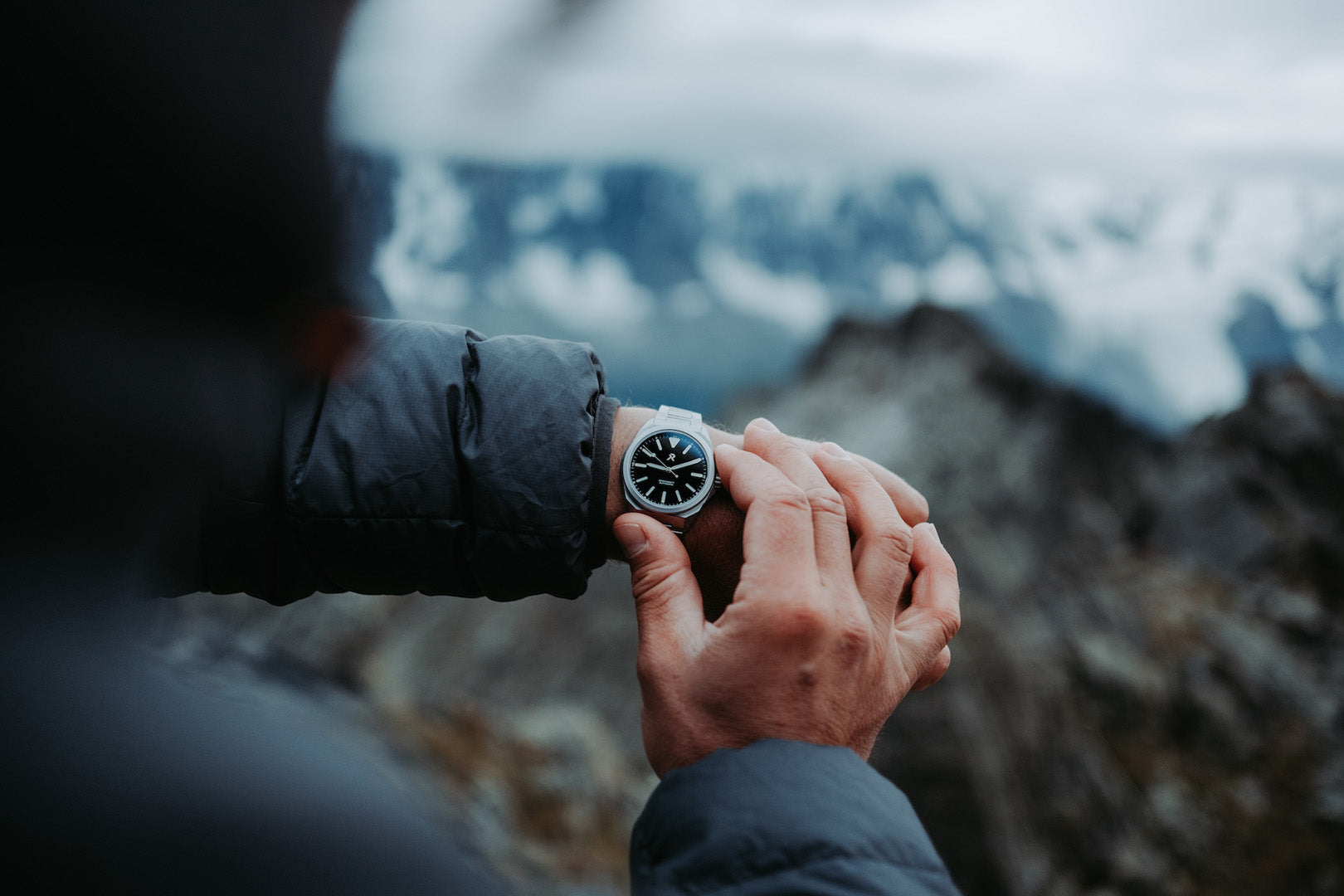



There's a shot you've seen a thousand times. Person on a ridge, arms outstretched, back to the camera, golden-hour light doing all the heavy lifting. The landscape is vast. The caption is something about finding yourself. The gear looks like it came straight from a catalog shoot.
It's a great photo. It's also completely hollow.
Between Instagram's rise and the surge of outdoor content everywhere, adventure shifted from an experience to a performance. The wilderness remains unchanged, mountains are still cold and indifferent, and trails still punish the unprepared. However, our way of discussing, framing, photographing, and sharing outdoor activities has been subtly taken over by the same aesthetic standards that promote skincare and luxury cars.
What Real Actually Looks Like
I've been spending a lot of time lately watching OutdoorBoys on YouTube. If you haven't come across them, they're a family who camps constantly in all conditions and across all kinds of terrain. What makes it compelling isn't the production value. It's the absence of pretense. The kids are sometimes miserable. The weather is frequently terrible. Things go wrong. Dad stays cheerful about it in a way that feels earned rather than performed.
It looks, in other words, like actual camping.
My actual camping experience includes pitching a tent that takes longer than planned, struggling with a sleeping mat that's never truly comfortable, preparing meals that are more practical than photogenic, and at least one moment, typically around 2 am, when I'm cold and questioning my decisions. None of these real moments make it to the Instagram portrayal of outdoor life.
The Instagram version shows a cast-iron skillet over an open fire, with something that looks as if it were prepared by a professional chef. The tent is backlit at dusk, a look that requires either extraordinary luck or a dedicated lighting setup. The person inside looks rested. The caption implies transformation. The reality is a gas burner, a tin of something, and a headtorch pointing the wrong way.
The Feed Needs Feeding
Outdoor culture has always had a performative edge. Mountaineers wrote expedition accounts. Explorers gave lectures. Adventure has never been purely private. But there's a difference between sharing an experience and reverse-engineering one for content.
The modern version goes something like this: choose a location based on its photogenic potential, pack gear that looks good on camera, hit the spot at the right light, get the shot, and leave. The experience exists to produce the image. The image is the point.
What often gets lost in that process is what truly matters: the aimless hours, wrong turns, and the internal conversations during times when there's no signal and nowhere to go. These moments can't be captured in a vertical video or saved. As a result, they are quietly edited out not only from the final post but also from the experience itself.
The Romanticized Version Is a Specific Kind of Lie
What bothers me about the Instagram version of travel and adventure isn't that it's aspirational. Aspiration is fine. It's that the gap between what's shown and what's real is consistently skewed in the same direction.
The hardship is always aesthetic. A rainy morning is misty and atmospheric, not actually wet and miserable. The solitude is golden and contemplative, never just quiet and slightly boring. The remoteness is cinematic, not inconvenient.
Real adventure contains all the inconvenient parts. The drive that's longer than expected. The campsite looked better on the map. The night was genuinely uncomfortable, and not in a character-building way, just uncomfortable. The moment when you think. I could be at home right now.
OutdoorBoys shows you this, which is why it resonates. There's a scene I keep thinking about, not a dramatic one, just a family, cold and tired at a campsite somewhere, trying to get a fire going. Nothing about it is cinematic. It's just true. And that truth is more compelling than a hundred perfectly lit golden-hour ridge shots.
What Gets Replaced
Here's what concerns me beyond the aesthetics: the gradual replacement of discomfort with the performance of discomfort.
Real adventure is, at its core, uncomfortable. You're cold, or wet, or lost, or tired. Your knees hurt on the descent. You made a navigation error and burned an hour fixing it. These aren't bugs in the experience -- they're the experience. The discomfort is the mechanism by which the outdoors teaches you anything.
However, discomfort doesn't attract much attention. As a result, content tends to highlight the peaks, both literal and figurative, while ignoring the valleys. Over time, this leads to a skewed perception of outdoor experiences, especially for those whose main exposure to outdoor culture is through social media.
The result is beginners who arrive underprepared and disillusioned when reality doesn't match the feed. The landscape was supposed to be transformative. It was just hard and wet and not particularly photogenic.
It's Not All Bad
To be fair, the visibility of outdoor culture has brought people outside who might never have gone. The aestheticization of adventure has democratized it in some ways, made it look accessible, and made it seem like something ordinary people do on weekends. That's genuinely good.
And plenty of creators are doing it right. The ones worth following are the ones who leave the ugly moments in. Who showed you the failed fire, the 2 am discomfort, and the campsite that wasn't worth it? The ones who trust that honesty is more interesting than a highlight reel.
The problem isn't the camera. It's what we choose to point it at, and what we decide to leave out.
The Fix Is Simple (And Hard)
Go somewhere without thinking about whether it'll photograph well. Leave without an itinerary optimized for content. Let the experience be genuinely unproductive for a while. Be cold. Be a bit lost. Eat something mediocre from a tin while the wind picks up.
Take the shot if it happens. But let it happen. Don't build the trip around manufacturing it. The mountains have been there for a very long time. They don't need a caption.


